


What to Do if I See Flying Termites?
A homeowner’s guide for winged termites or discarded termite wings sightings in Perth.
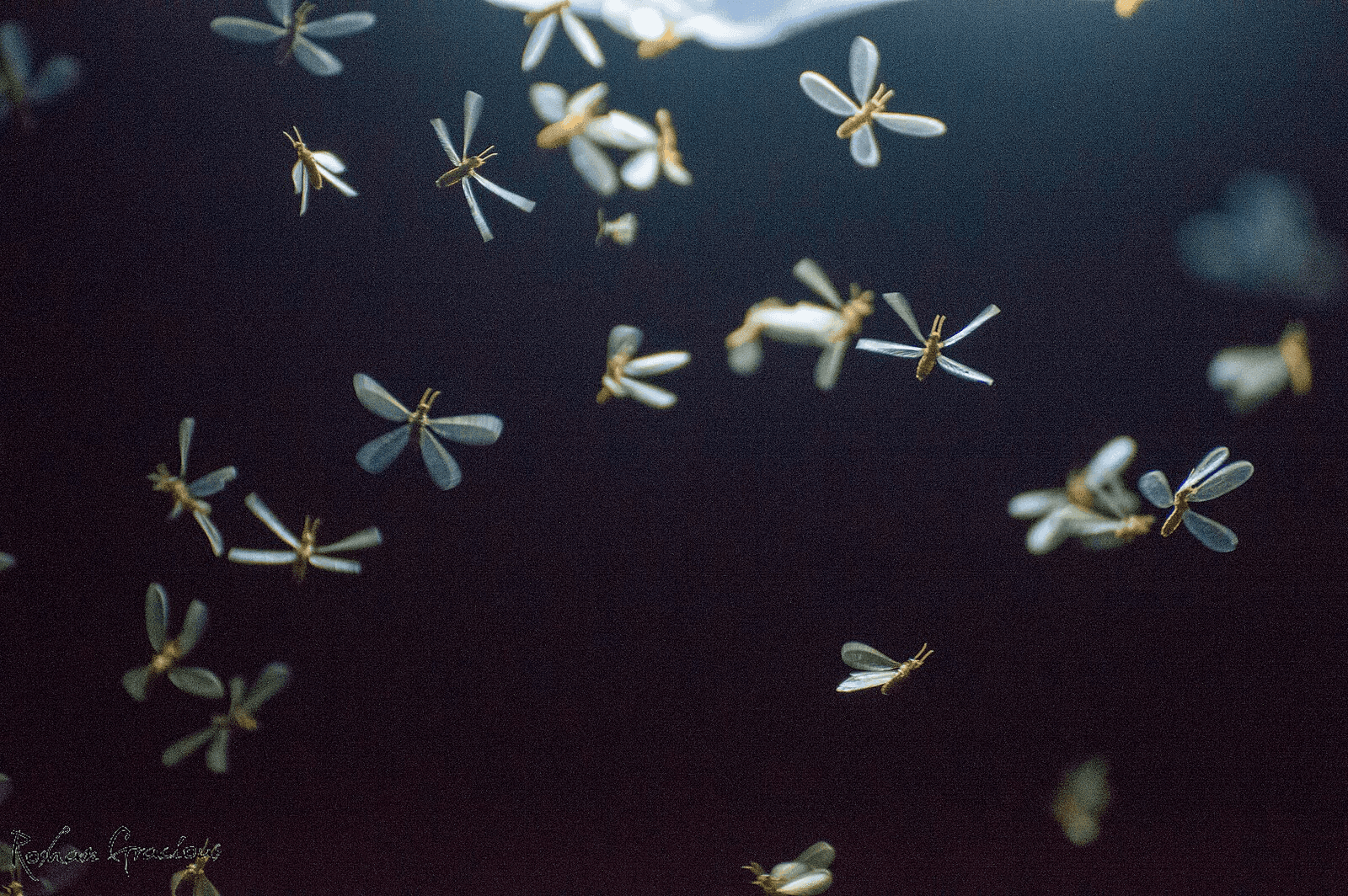
On warm summer evenings in Perth, it’s common to see small winged insects gathering around outdoor lights—especially after a spell of rain. But if those insects leave behind piles of delicate, papery wings on your floors or windowsills, you may be seeing one of the most important warning signs a homeowner can encounter: flying termites.
These winged termites, called alates, swarm during WA’s hot and humid summer nights to mate and start new colonies. And when they appear around your home, it usually means a mature termite colony is already active nearby.
This guide will help you quickly recognise flying termites (and tell them apart from ants), understand why they swarm in summer, what their presence means for your property, and what steps to take to protect your home before hidden damage occurs.
What Are Flying Termites (Alates)?
Flying termites (also known as alates or swarmers) are the reproductive members of a termite colony.
Unlike workers and soldiers, which stay hidden underground or inside timber, these termites develop wings and leave the nest to mate and form new colonies.
Flying termites start emerging in a colony once it has matured. Usually once a colony is large and established over many years.
Alates include:
- Male and female winged reproductives (future kings and queens)
- Mature swarmers released from established colonies
- In some species, secondary reproductives (termite queens) capable of developing wings
Once their flight is over, the wings are shed, and the new pair become king and queen of a new termite colony beneath soil or within timber.
Why Flying Termites Appear in Summer
Flying termites typically emerge when:
- Humidity spikes after rainfall
- Evening temperatures reach 25 – 30°C
- Timber and soil retain moisture
- A colony has matured enough to produce reproductives
After-rain swarms
The most common trigger for alates is rainfall followed by a warm, still night. If you see them clustering around outdoor lights or windows, there’s an active colony nearby.
Western Australia has a great climate for termite reproduction
WA’s climate creates the perfect stage for termite swarming, especially in the warmer months. The combination of warm days, balmy nights and post-rain humidity gives alates the moisture and lift they need to fly. Homeowners in Perth, Peel, the South West and Wheatbelt often notice swarms during summer evenings.
How to Identify Flying Termites
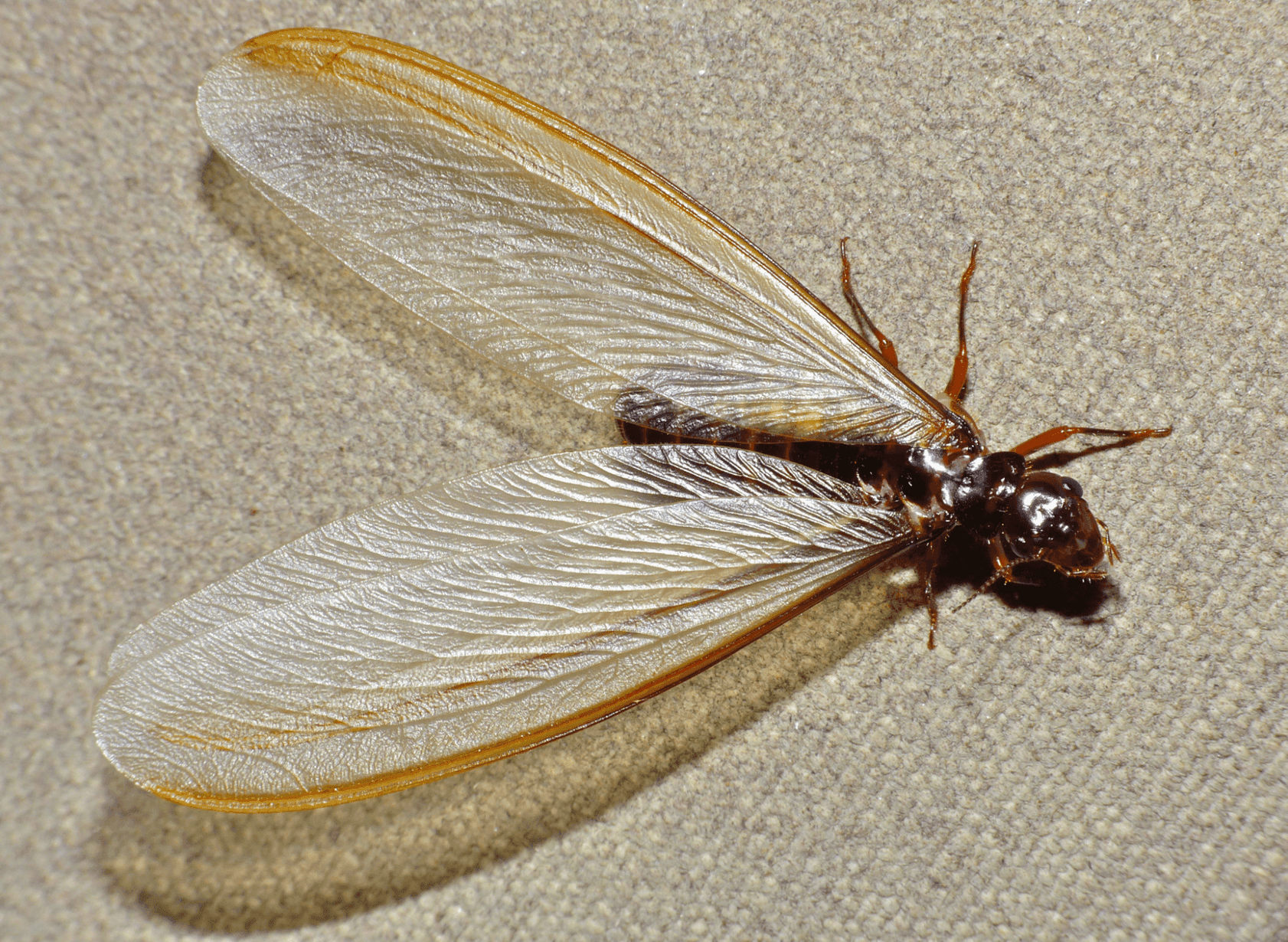
Flying termites can easily be mistaken for flying ants, but a few key features set them apart.
Winged termite features:
- Two pairs of wings of equal length
- Straight antennae
- Thick, straight waist
- Dark brown or black body
- Wings that are pale, delicate and longer than the body
Once alates shed their wings, the remaining reproductive pair looks similar to workers (soft-bodied and pale) but slightly larger and darker.
Flying Termites vs Flying Ants
What’s the difference? Ants and termites look similar, especially when they both have wings.
Here’s your quick reference guide:
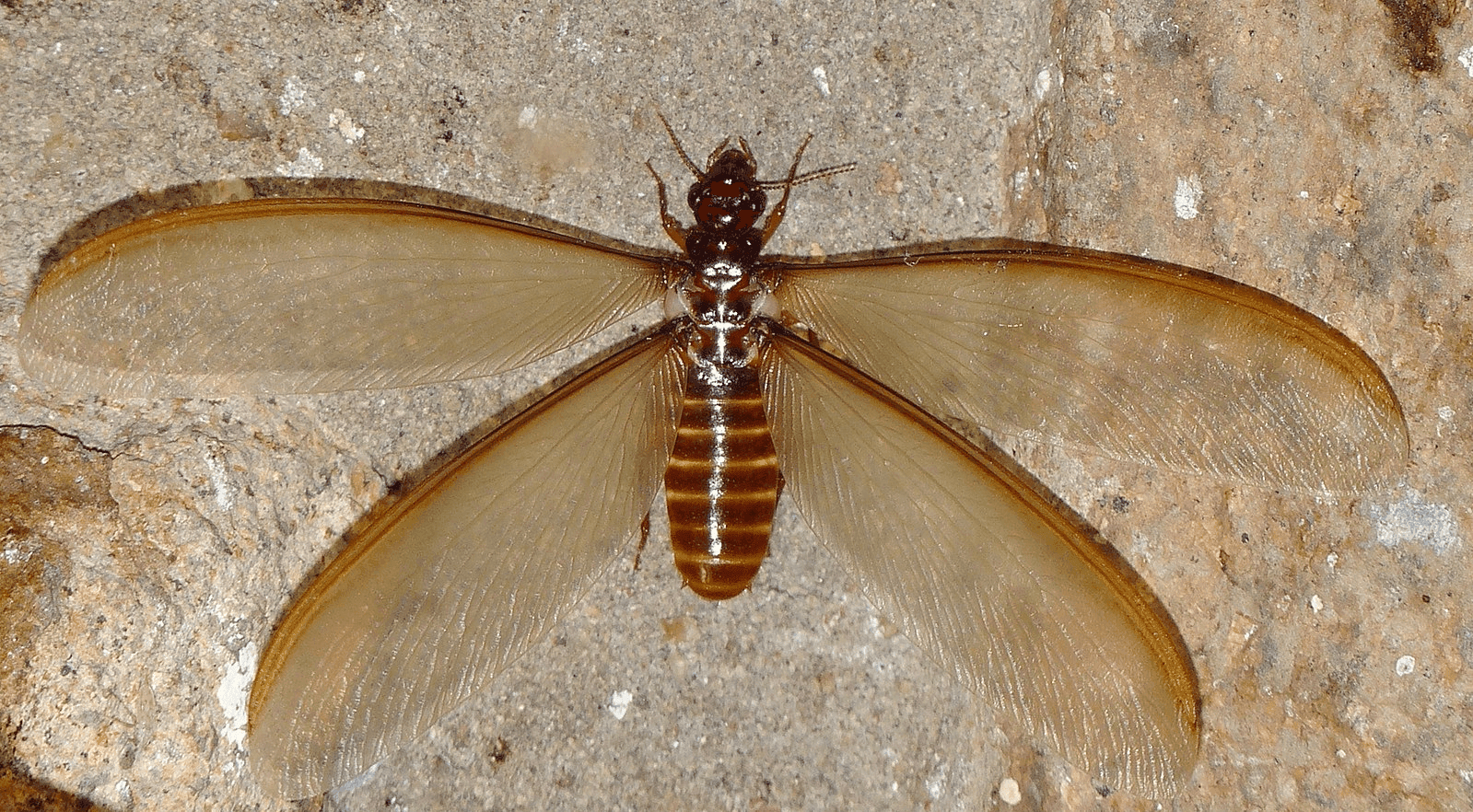 Image by Bernard Dupont (CC 2.0) |
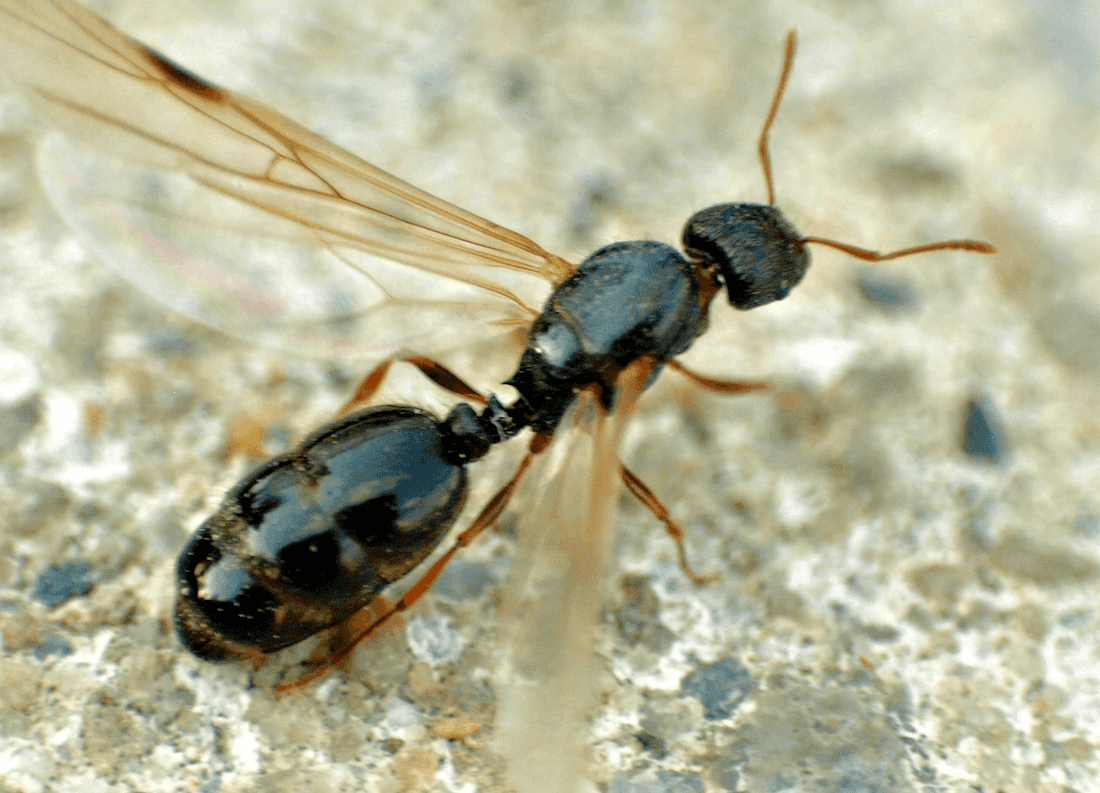 Image by В. Николов, CC 1.0 |
|
|---|---|---|
| Feature | Winged Termites | Flying Ants |
| Wings | Long, equal length | Front wings are larger |
| Waist | Straight, thick | Narrow, pinched |
| Antennae | Straight | Elbowed |
| Body Segments | 3 Body Segments | 2 Body Segments |
| After mating | Shed wings | Keep wings |
If you can’t tell the difference, take a photo and send it to a pest professional for identification.
Why Do Flying Termites Shed Their Wings?
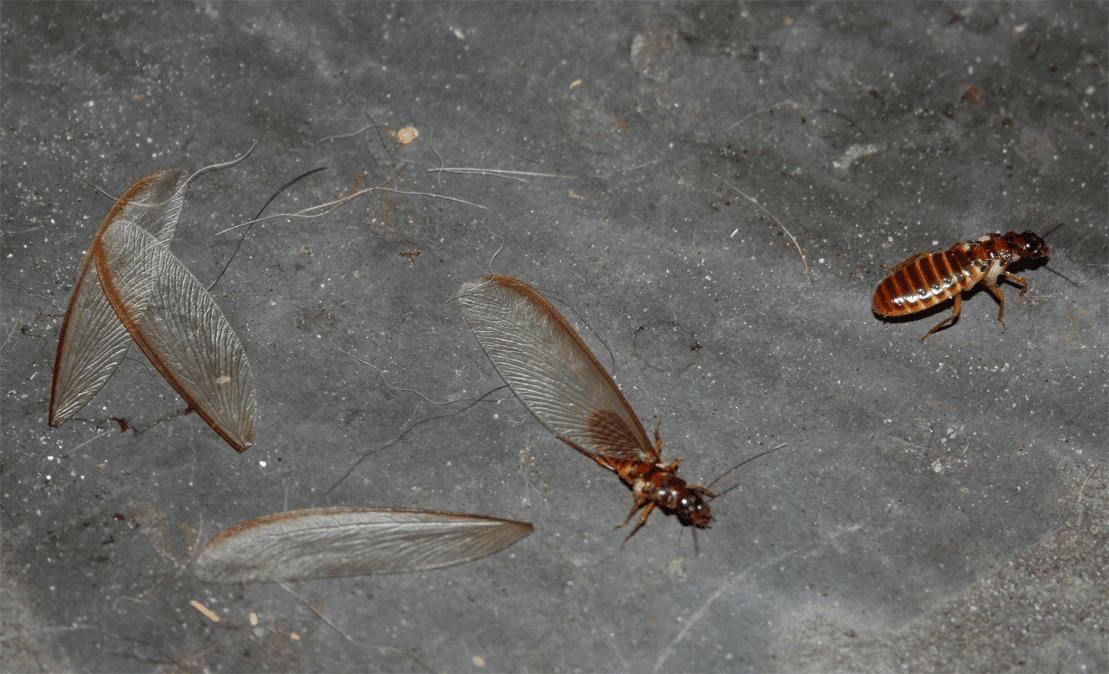
Shedding wings is a defining behaviour of flying termites. Once they’ve landed and paired:
- Wings are no longer needed
- Shedding helps them move easily into timber or soil
- It marks the beginning of a new colony
What discarded wings look like:
Light, papery, translucent wings often found in piles, especially near:
- Window sills
- Door frames
- Lights
- Floor edges
Finding termite wings indoors is a strong sign that a colony is either inside your home or extremely close.
Inside a Termite Colony: The Queen, King & Reproduction
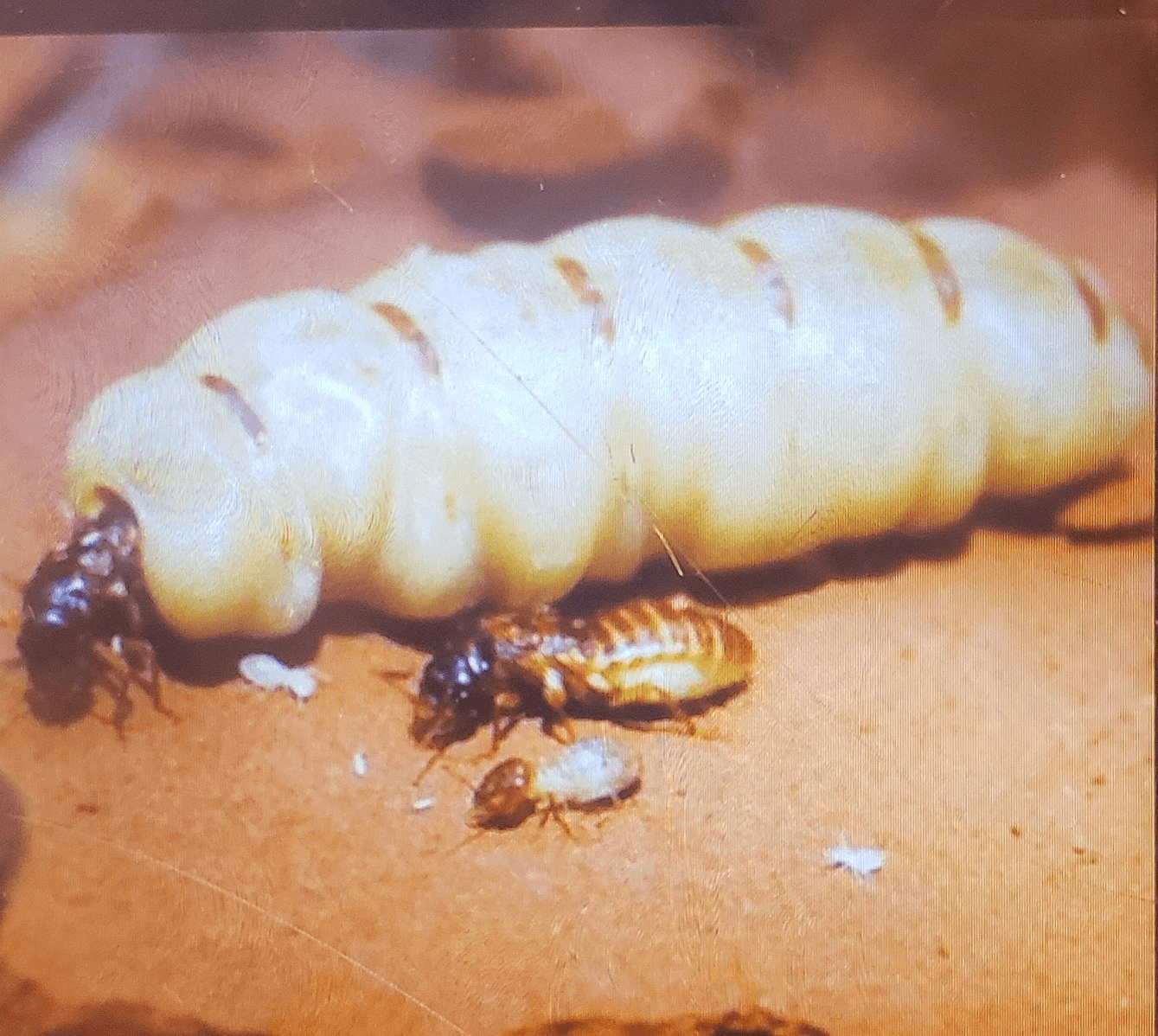
Winged termites are a sign of a potential new colony, so let’s take a closer look at termite colonies.
Every colony revolves around its queen. Once fully established, she can lay thousands of eggs per day, particularly in highly destructive species such as Coptotermes, which are widespread across WA.
Termite queen facts:
- Lifespan: up to 25–30 years
- Size: much larger than workers
- Amount: Usually one queen, but secondary queens may emerge in large colonies
The termite king:
Lives alongside the queen for life, helping fertilise eggs and regulate colony activity.
Why killing the termite queen doesn’t stop the colony:
Many termite species can produce replacement reproductives. This is why modern baiting systems focus on eliminating the entire colony rather than targeting the queen alone.
Flying Termites Inside Your Home… What Does It Mean?
Finding flying termites indoors – especially around lights at night – usually signals one of two major concerns:
a) A mature colony may already be inside your home.
Common areas include wall cavities, subfloors, roof timbers and anywhere moisture is present.
b) A nearby colony is attempting to start a nest inside.
Alates enter through tiny gaps around windows, vents and screens.
Do flying termites mean an infestation?
Not always – but they always mean a mature colony is close, which significantly raises the risk.
Do they bite or harm humans?
No. They’re harmless to people, but extremely harmful to properties once a new colony forms.
Why Do Flying Termites Appear at Night?
Alates are strongly attracted to light. This is why WA homeowners often notice swarms gathering around:
- Porch or garden lights
- Windows and sliding doors
- Downlights
- Television screens
If you’re seeing them outside at night, it usually means a colony is active in your yard, or very close by.
Do Subterranean Termites Have Wings?
Yes. Subterranean species—including Coptotermes, Heterotermes and Schedorhinotermes—produce winged alates.
Workers and soldiers never develop wings.
Do Winged Termites Eat Wood?
No. Swarmers don’t eat wood during their flight. But the colony they might start certainly will.
Your concern isn’t the alates themselves. It’s the hidden damage caused by the colony they come from or the new one they hope to establish.
What a Termite Swarm Really Means
A swarm around your home signals that:
- A nearby colony is large and mature
- New colonies are being formed
- Your home is within the colony’s foraging range
- You may already have concealed termite damage
Under favourable conditions, new infestations can begin quickly and spread silently.
What to Do If You See Flying Termites
Do NOT spray them.
Spraying only kills the visible swarmers but it does nothing to the colony.
Instead:
- Turn off indoor lights and let them exit if possible.
- Book a professional termite inspection immediately.
- Check for leaks, dampness or drainage issues.
- Consider installing or updating a termite protection system.
- In the case you have an infestation, book a termite treatment.
WA properties are particularly vulnerable, and untreated infestations can cause extensive structural damage.
How to Prevent Flying Termites from Entering Your Home
- Fix leaks and moisture issues
- Install tight-fitting flyscreens
- Keep mulch, timber and firewood away from walls
- Avoid timber-to-soil contact
- Improve subfloor and roof ventilation
- Schedule annual termite inspections
Prevention is always more affordable than repairs.
Takeaways for When You Spot Flying Termites
Flying termites in summer might seem like a harmless seasonal annoyance, but they’re one of the clearest signs that your home may be at risk. Whether you’ve found discarded wings inside, seen swarmers after rain, or noticed flying termites gathering around lights at night, early action is essential.
Termites are persistent but they are also treatable and preventable.
With the right information, a professional inspection and a reliable termite protection system, WA homeowners can stay one step ahead and protect their biggest investment.
FAQs
Can termites fly?
Yes, only the reproductive caste (alates).
Do flying termites bite?
No.
Are termites more active in summer?
Yes. Heat and humidity trigger swarming.
What does a termite without wings look like?
Termites without wings are soft-bodied, pale and ant-like, but with a straight waist. Workers particularly will also be smaller.
How do I tell flying ants from termites?
Check wings, waist and antennae (see table above).