


Types of Termites in Australia
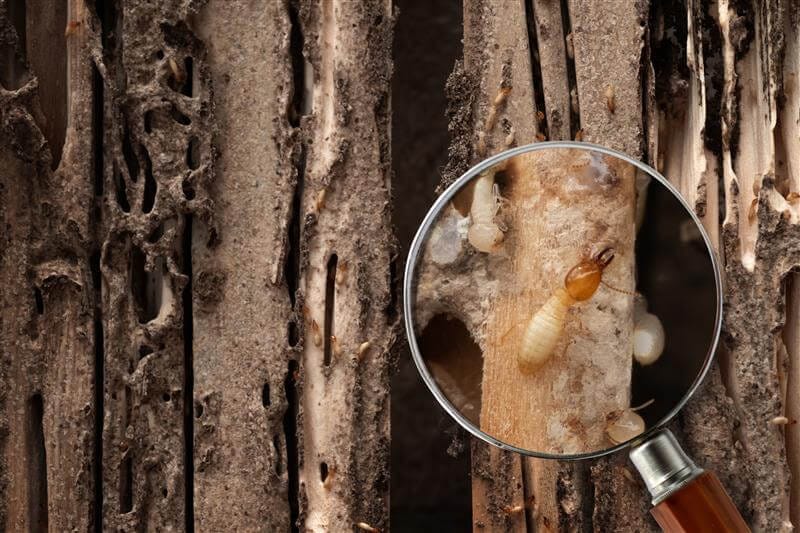
When it comes to protecting your home, understanding the types of termites in Australia is one of the most important steps you can take.
Australia is home to more than 300 Australian termite species. Most play a valuable ecological role, but a handful of species can cause severe structural damage to homes across the country.
In this blog, we’ll break down the most destructive termite species in Australia, how to identify them, the wood they prefer, and also some things that homeowners in Perth and wider WA specifically should know about local termite behaviour.
What Type of Insect Is a Termite? Are Termites a Type of Ant?
Although termites are often called white ants, they are not ants at all. Termites belong to the order Blattodea, making them closely related to cockroaches.
Ants belong to Hymenoptera, along with bees and wasps.
Here’s how to tell them apart:
- Body shape: Termites have a thick, uniform waist. Ants have a narrow waist.
- Antennae: Termites have straight antennae. Ants have elbowed antennae.
- Wings: Termite alates have two pairs of wings equal in size. Ant wings differ in length.
- Colour: Termites are pale or creamy white. Ants are brown to black.
Why Termite Identification is Actually Important, And Not Just a ‘Good Thing to Know’
Getting the type of termite wrong can delay effective treatment. Why? As you may expect, different termite species behave and act differently. Which is why proper termite identification is important.
To put this more clearly: some termite species are much deeply rooted in the ground, other termite types are better prepared to respond to changes in their environment, and some infestations are easier to exterminate than others. Identifying the termite species living in your home helps pest control specialists put together the best solution, to ensure the problem is nipped in the bud.
The best way to identify the termites behind your suspected infestation and prepare for complete elimination of the nest is with a Professional Termite Inspection.
How Many Different Types of Termites Are There in Australia?
Australia has over 300 species of termites, but only around 20–30 species are considered pests. These pest species fall into three main categories:
- Subterranean termites (the most destructive)
- Drywood termites
- Dampwood termites
Types of Termites by Caste
There are different castes of termites in every colony:
- Nymph
- Worker
- Soldier
- Swarmer/Alate (Reproductive)
- King
- Queen
The worker termites of almost every species is blind. The soldiers have larger heads and strong mandibles for defence (yes for biting).
The center of every subterranean termite species is the queen. Killing the termite queen is critical in destroying the termite colony (along with the rest of the nest). It immediately interrupts their communication signals and hampers their ability to bounce back in numbers. However some colonies have a secondary termite queen that won’t take too long to replace and take up the same reproductive role.
The soldier’s head is usually the key visual that will tell you which type of termite you have on your hands.
1. Subterranean Termites (Most Destructive Types of Termites in Australia)
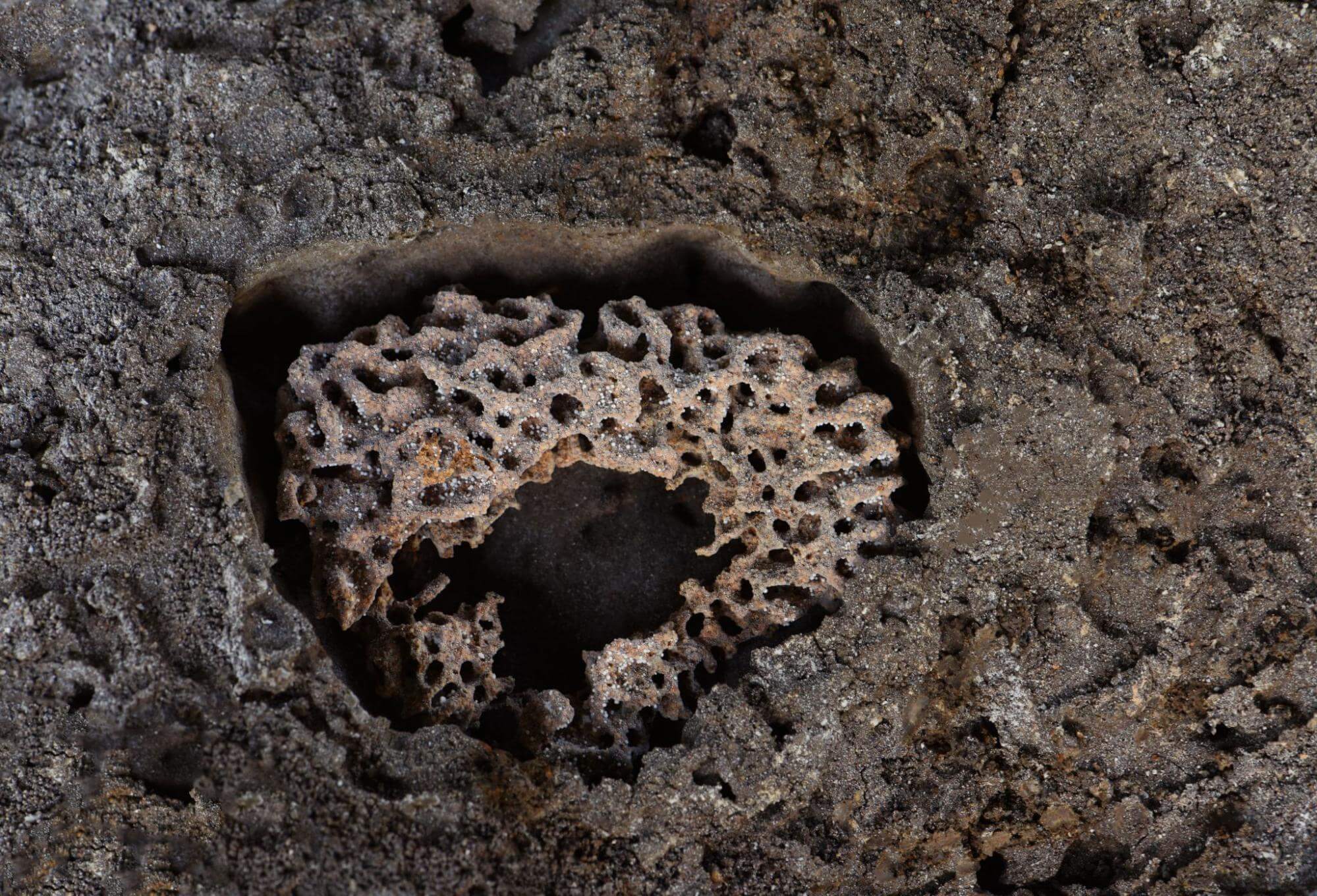
The word ‘subterranean’ may sound like a mouthful, but it just means ‘existing, situated or operating underground’. As this term suggests, Subterranean species form large underground colonies and build mud tubes to access timber.
These species are the most common type of termite. They are the species of termite that causes over 70% of termite damage in Australia. A benefit in managing them is that Subterranean termites need to stay connected to a moisture source and warmer climates to thrive. Therefore, they usually make their nests in or near the ground to be close to water in the soil.
In appearance, these worker termites in this class have a creamy-white colour and are roughly about 5mm long.
A bite from a soldier bite from a subterranean termite doesn’t hurt more than a pin prick (as their mouths are still small) and don’t cause any poisoning or lasting damage. If you’re nervous with insect bites, you can be assured they don’t seek out humans. Instead they just respond if handled.
Subterranean Termite Shelter Tubes
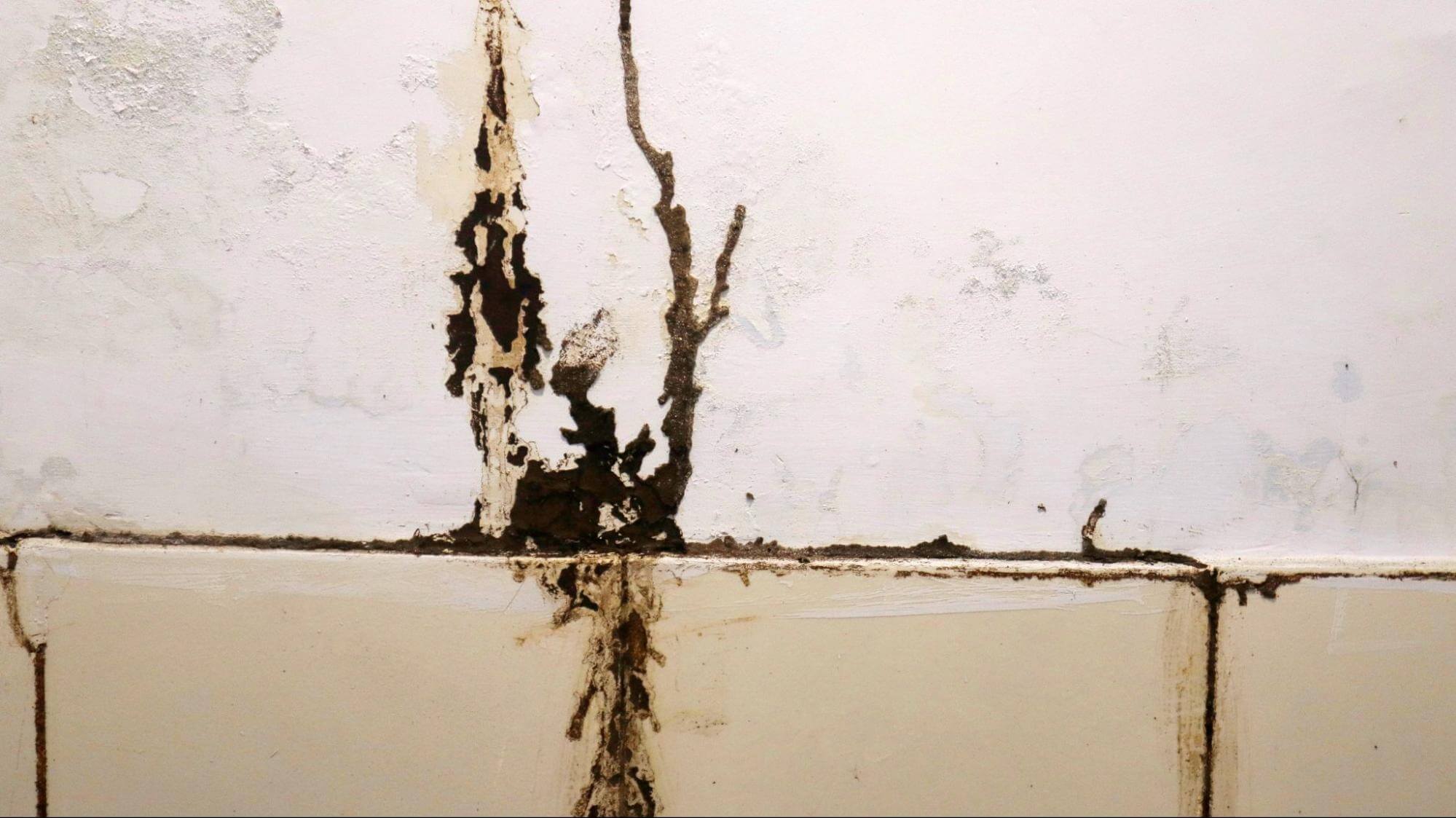
These termites use soil, wood, faeces and saliva to build shelter tubes and nests for their colony. Some Subterranean termite species build nests above ground, or shelter tubes above ground that attach to a nest in the ground.
Seasonal Activity
Subterranean termites display little to no activity in dry and cold conditions. They are their most active in summer and after rainfall. In tropical conditions where it is warm and wet, they can stay active year round.
Key Subterranean Termite Species in Australia:
Coptotermes acinaciformis
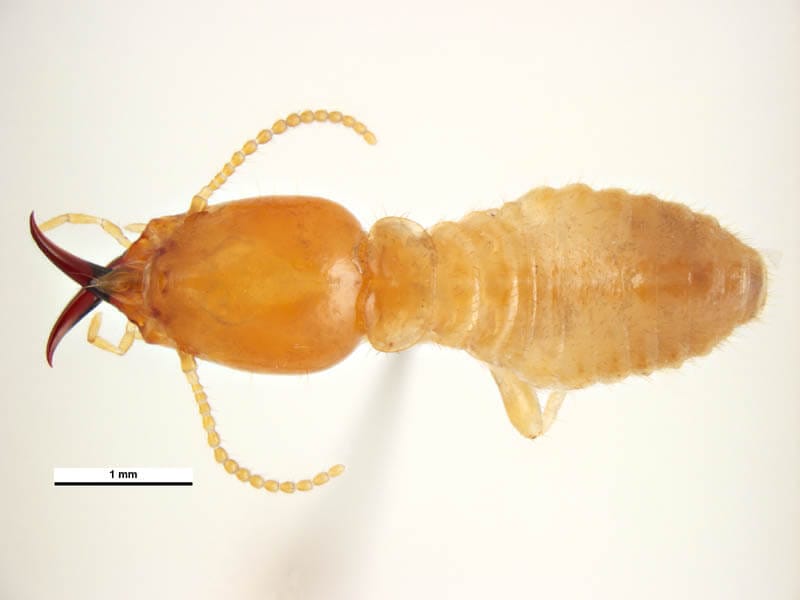
Image from Atlas of Living Australia. By: Simon Hinkley & Ken Walker, Museum Victoria.
Coptotermes acinaciformis, sometimes called the ‘Western Termite’ is both the most common and destructive termite in Perth.
How to identify: These termite species are easiest to identify by their soldier ants. Western Termite soldiers have a brown hardened head, plus curved jaws for defence against other insects, like ants. They are also eyeless and blind. When disturbed, Coptotermes soldier termites are also known to make a clicking or tapping sound.
The workers are all very small, extremely white, soft-bodied and eyeless. This can be a more common appearance across different termites.
In the summer, Coptotermes acinaciformis termites may mature and develop as a winged termite known as ‘alates.’ Unlike their brethren, these termites are 12mm long, brown, have eyes (compound eyes), and four evenly sized wings. They scout out opportunities for a new colony, and they can freely reproduce with other alates.
Spotting winged termites means serious trouble. It means your home already hosts a mature Coptotermes Acinaciformis termite colony, or may be at risk of a potential termite infestation soon.
Risk level: Extreme
Found: All Australian states, but especially common in WA
Behaviour:
- Travels up to 50m underground
- Builds nests in soil, tree stumps, wall cavities
- Responsible for the majority of severe structural damage
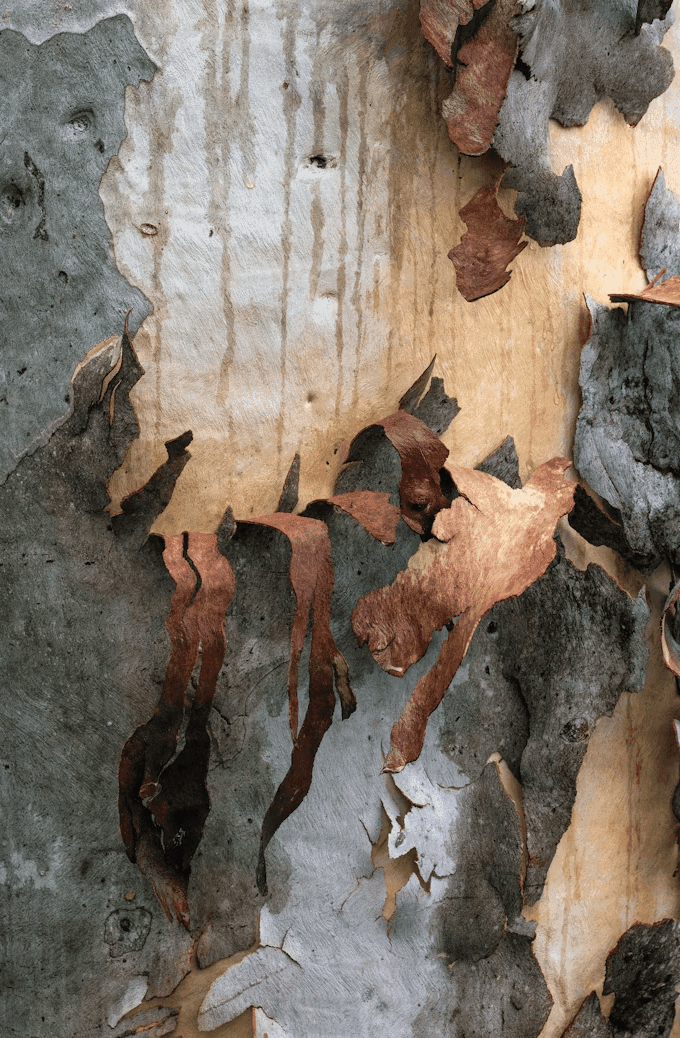 |
“I’ve got termites in my gum tree in Perth, what species is it?”
This is a common thing we hear from a lot of homeowners in Perth as pest control specialists. Most of the time, the type of termite is the Coptotermes Acinaciformis. |
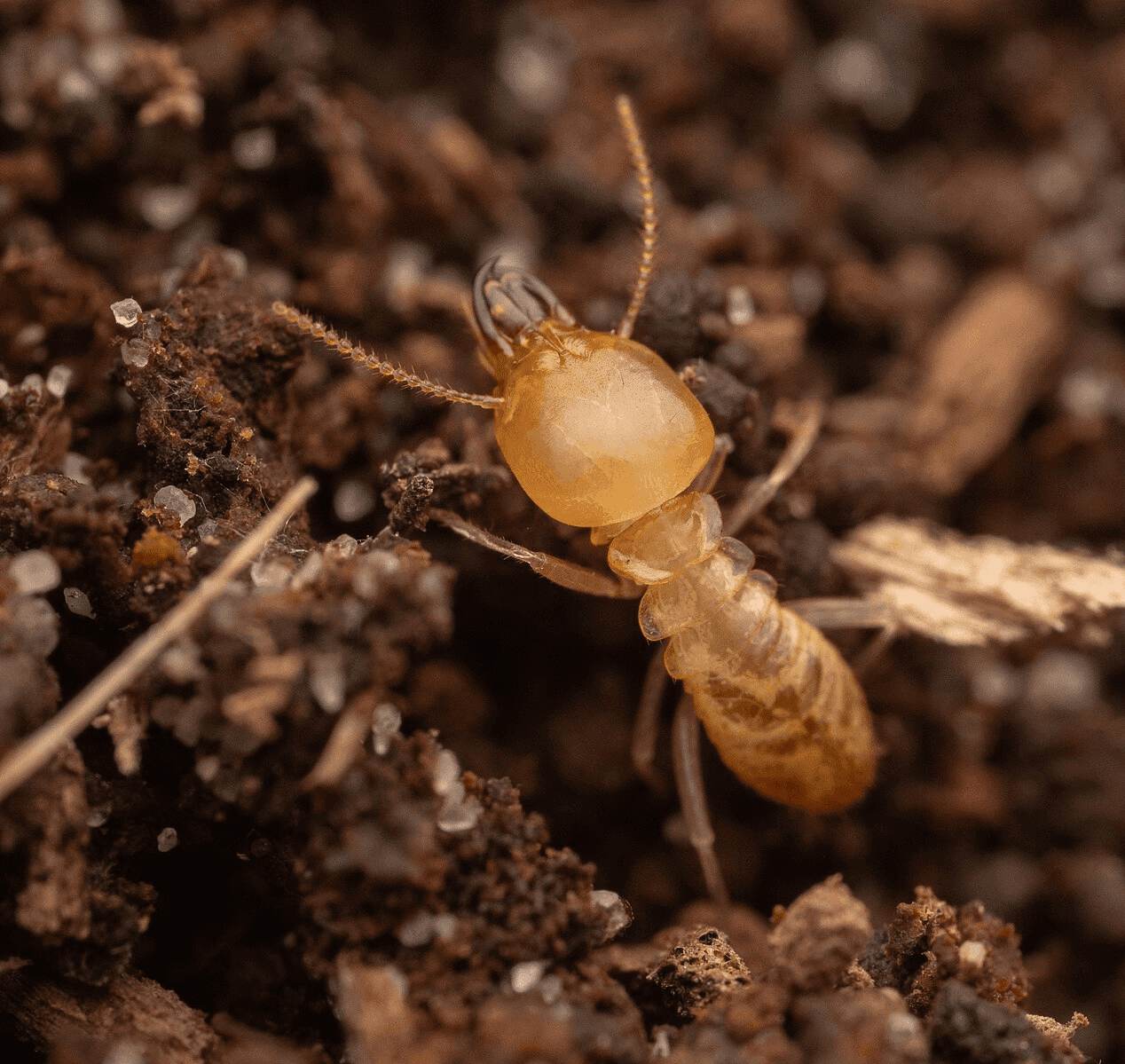
Schedorhinotermes intermedius
How to Identify:
This termite species has both ‘major’ and ‘minor’ soldiers, which makes it harder to identify this species.
- Major soldiers have a bulbous head, are longer (at 5mm-7.5mm in length) and thicker exoskeletons.
- Minor soldiers have a narrower head, thinner mandibles and are shorter in length (3mm-5mm).
Both types of soldiers seem to be pale yellowish-brown in colour and have orange coloured heads.
This species also has the other typical termite roles in the colony: king, queen, workers and swarmers/alates, in addition to their soldiers.
Risk level: Very high
Nest sites: Under slabs, tree roots, warm areas (like fireplaces)
Swarming Activity: Winged termites or alates in this species typically happen in spring or early summer.
Behaviour:
This Australian termite species creates extensive tunnel systems: multiple entry points and sub-nests in their infestations, which leads to an almost intelligently planned destruction of the property. Like Coptotermes acinaciformis termites, they also construct mud tubes for sheltered travel between structures in the soil and wood.
Their trait of building ‘sub-nests’ also creates multiple almost semi-independent termite colonies, which can make completely eliminating this species very difficult.
When eating wood, they tend to create a very gouge type of pattern compared to other termites, and like to eat around metal nails.
Nasutitermes Termites
Bernard DUPONT from FRANCE, CC BY-SA 2.0, via Wikimedia Commons
_(8371245976).jpg)
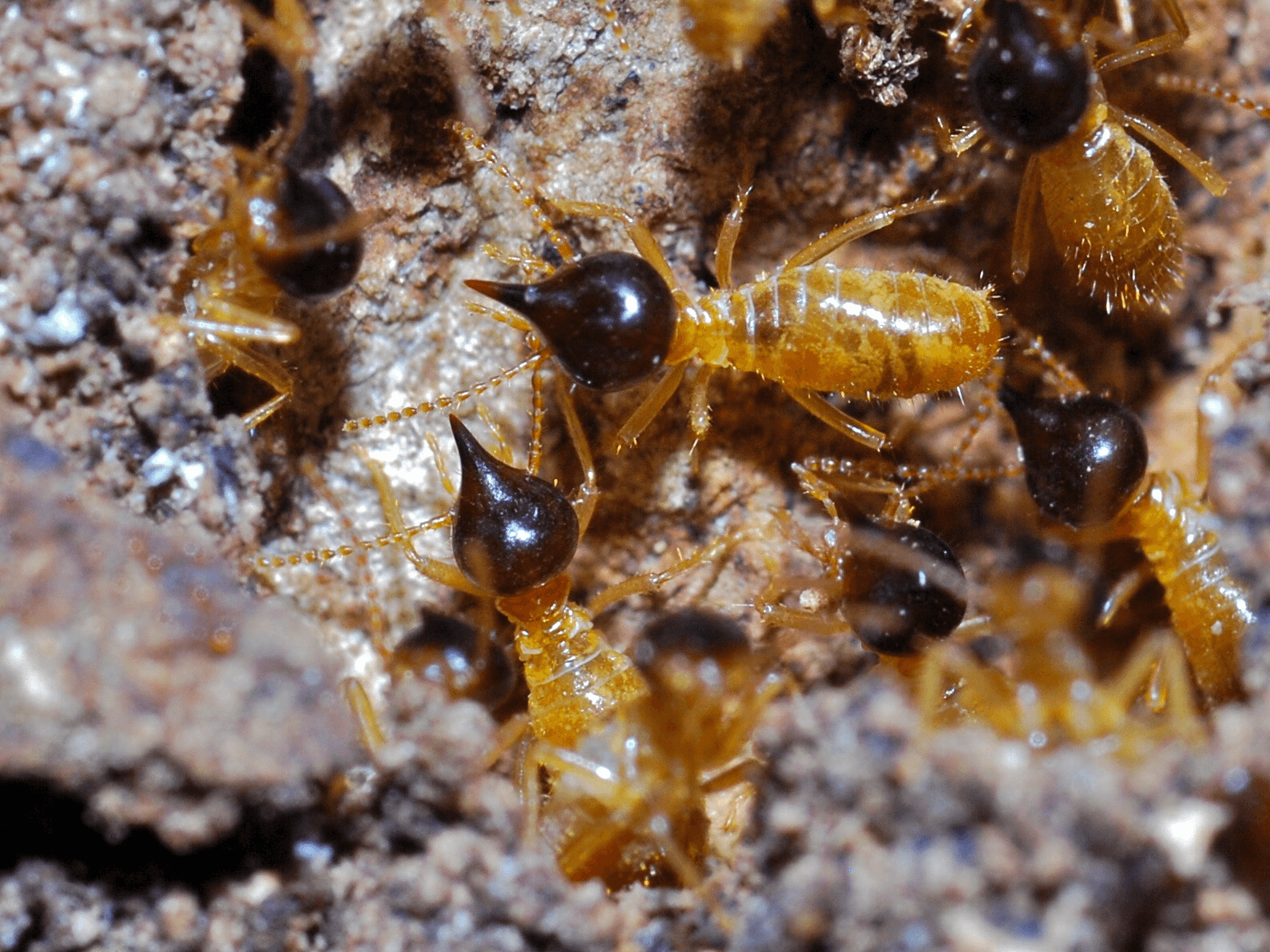
There are three types of ‘Nasutitermes’ termite species in Australia:
- Nasutitermes Exitiosus
- Nasutitermes Fumigatus
- Nasutitermes Walkeri
How to Identify: All of these species of termites have soldiers with brown pointed cone-shaped heads. Soldiers in this termite family uniquely have this “Nasute” head, which is pointed and shoots out a sticky or toxic fluid to protect against predators, like ants.
On skin contact with this fluid, humans with sensitivities may experience skin rashes (dermatitis). From inhalation, sensitive individuals may also experience sneezing, coughing or asthma attacks. Termite saliva and droppings can spread mould spores, which can also lead to more of a health risk, especially for those already compromised. However, soldier termites with their Nasute liquid are not directly venomous.
Their worker species often are about 4.5mm in length. They are a creamy-white, soft-bodied, wingless, blind, and often described as ‘chubby’.
In the summer, Nasutitermes termites may also mature into ‘alates’ and develop wings. Here these termites will then look to expand to new territory and repopulate. A colony usually takes 3-6 years to reach this state of maturity. Winged termites also discard their wings once they have mated to become the new king and queen of a colony. However most aren’t successful.
Nasutitermes winged termites (as like all termite species) are a warning sign: there could be potential opportunity swarming, or an indication that you have a serious infestation.
Risk level: High
Diet: Mostly decaying wood, but can enter structural timber when moisture is present
Where found: Coastal and bushland areas, including outer-Perth suburbs
Behaviour:
- Feed mainly on decaying or weathered wood.
- Common in bushland and outer-suburban Perth.
- Often become a problem when moisture is present in structures.
- Because of their effective ‘liquid gun’ against ants, they tend to be less shy and make open-air trails to collect food. (As opposed to the mud trails or shelter tubes from other species.)
Heterotermes ferox
Also known as the ‘Forest Termite.’
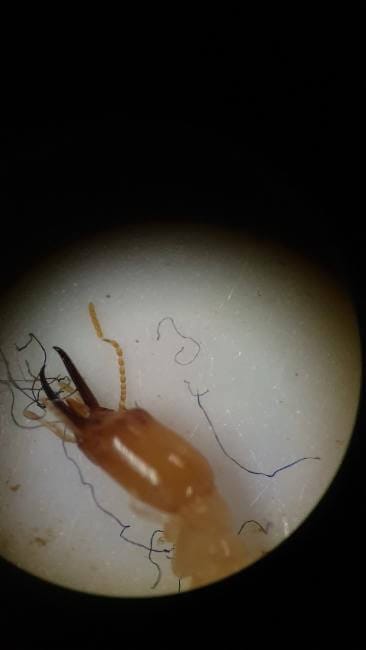
Image from the Atlas of Living Australia.
How to Identify:
As like with any termite species, they are easiest to identify by their soldiers. Particularly their head colour, shape and mandibles. Soldiers of this species are 3.5 mm – 7.5mm in length and have dark mandibles. Their heads are rectangular shaped, but their head is a light yellow colour (just a bit darker than their pale cream-white bodies). The soldiers have a sleek, cigar like body shape.
They can sometimes be confused with the more property-devasting Coptotermes acinaciformis species.
Risk level: Moderate
Unlike other Subterranean termite species, the Heterotermes Ferox termites are considered not a major worry. Their colonies are relatively small. They can cause significant damage, but this is usually in the case that they have been there for a long time, or multiple colonies of this species taking root in the area.
Location: WA, QLD, SA, NSW and VIC.
Common in: Decaying timber, damp timber, paling fences, wooden poles, timber flooring, timber decking, and pergolas near their nests. They prefer hardwood but will eat softwood if there is nothing else.
But their main target is timber that is already decayed or has been weathered.
This species is also widespread across metro Perth.
Behaviour:
Heterotermes Ferox termites cause superficial damage. They are also slow moving and less aggressive.
2. Drywood Termites
These species live inside the timber they consume, without needing soil contact. Drywood termites are less common in Western Australia but can be accidentally transported through furniture.
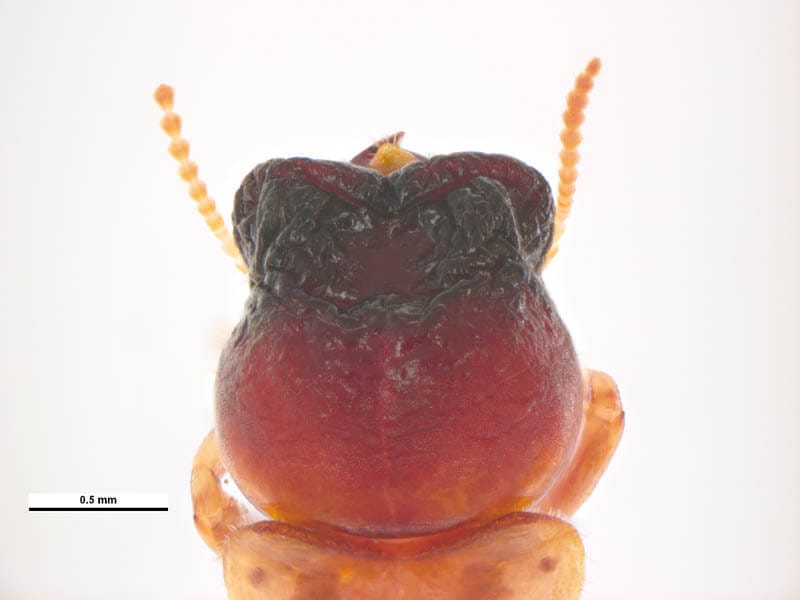
Cryptotermes brevis
Also known as the West Indian Drywood termite or powerpost termite.
 |
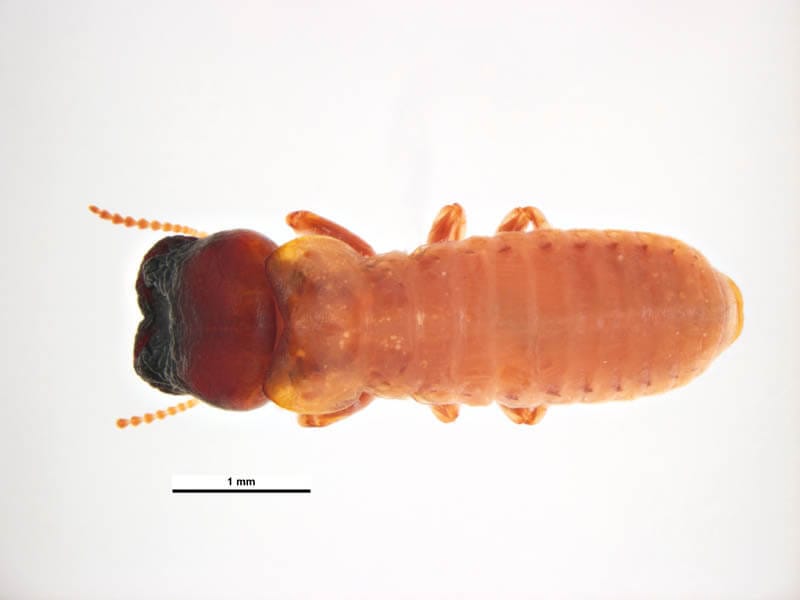 |
Images from Atlas of Living Australia. Photographer: Simon Hinkley & Ken Walker, Museum Victoria.
These termite species are an introduced pest. They can live completely inside timber structures, without any sources of water.
How to Identify: Cryptotermes brevis termites are bigger and deeper-bodied than the smaller, paler Subterranean termite species. Like in other termite species, it’s easiest to identify this termite species by the soldiers.
Cryptotermes brevis soldiers are about 4mm – 5mm long and colourless bodies. Their most defining feature is their black, wrinkled and squarish heads. Sometimes described as looking ‘plug-like’.
Alates, or winged termites, in this species have two pairs of transparent wings with dark veins that run along the leading edge. Once ready to mate and attempt to be king and queen of a new colony, they drop their wings, like all termites. Once found, these infestations must also be reported for most states of Australia.
These termite species are particularly hard to ‘see,’ as they never need to be in contact with the soil or other sources of moisture. Which makes it easy for them to thrive and spread in timber structures without detection. Thermal imaging is another process often used to detect infestations of these termites.
Risk level: High (especially when multiple colonies exist).
This species is regarded as one of the most destructive drywood termites around the world, and infestations often go unnoticed for years.
The West Indian drywood termite (Cryptotermes brevis) is even classified as a notifiable pest or restricted matter under some Australian state biosecurity laws.
For example, the Queensland Biosecurity Act 2014 and the NSW Biosecurity Act 2015.
Found: QLD, NSW, VIC
Behaviour:
This species lives entirely within timber, with colonies that are relatively small. They tend to target moisture protected wood such as houses, boats and furniture. These termites are typically difficult to find. In some termite inspections, the recommended way to identify West Indian drywood termites is by collecting their faecal pellets.
Drywood Termite Treatment:
This termite species requires specialised treatments. The NSW Department of Primary Industries outline this course of treatment in their Group Biosecurity Prohibited Matter Permit for owners of buildings or timber items with this termite:
- Fumigation by a licensed pest control specialist
- Freezing for 24 hours
- Heat treatment to at least 49°C for a minimum of 1 hour
- Double wrapped with heavy duty plastic sheeting. Edges and ends sealed with heavy duty tape. And finally, labeling the wrapped package with “Infested with drywood termites, not to be reused.”
Once this process has been undertaken, the contaminated materials can be disposed of in a waste management facility that is able to accept it.
3. Dampwood Termites
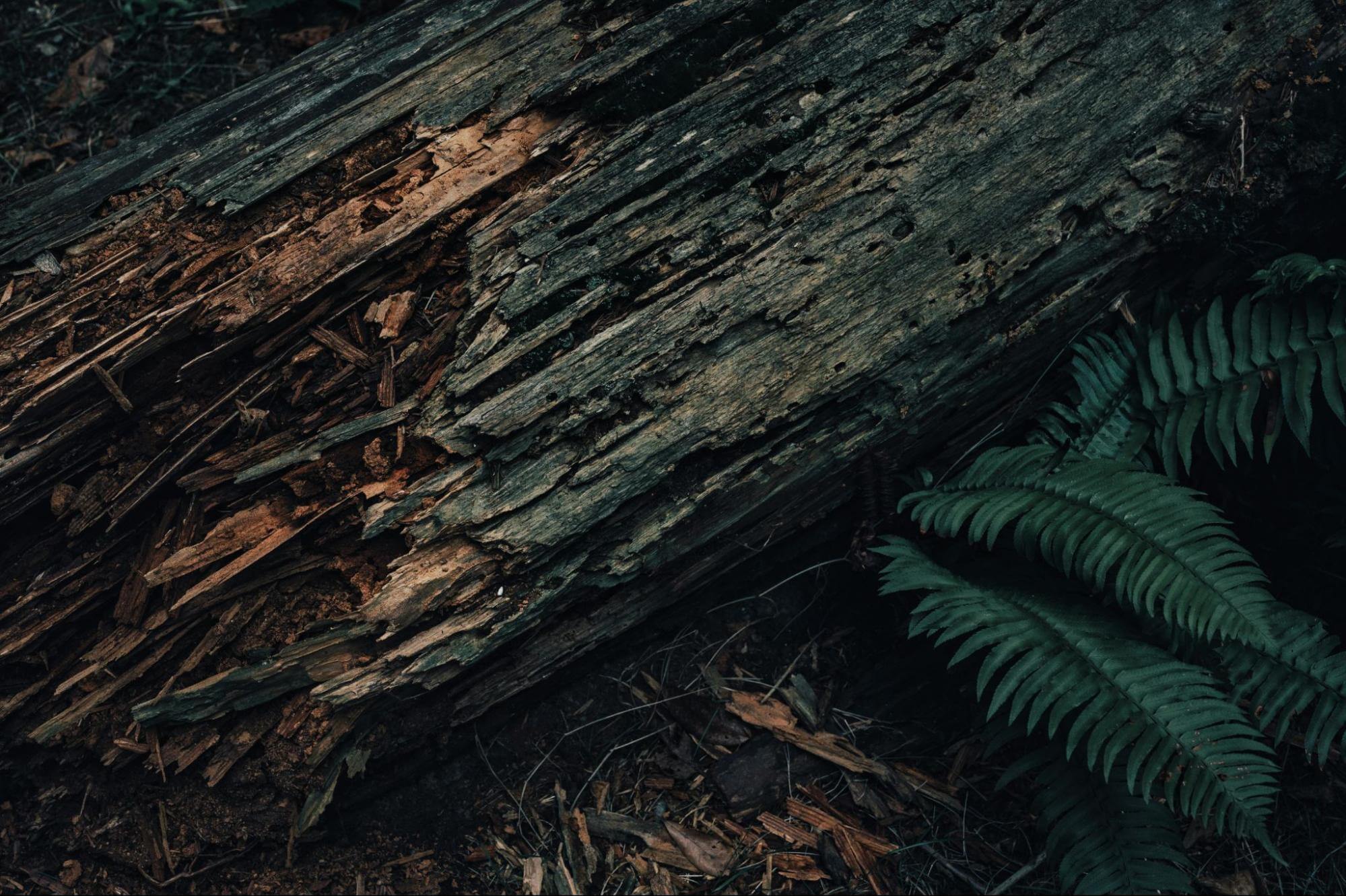
Dampwood termites require moist or rotting wood, making them less likely to attack well-maintained homes but dangerous when leaks or drainage issues exist.
Porotermes adamsoni
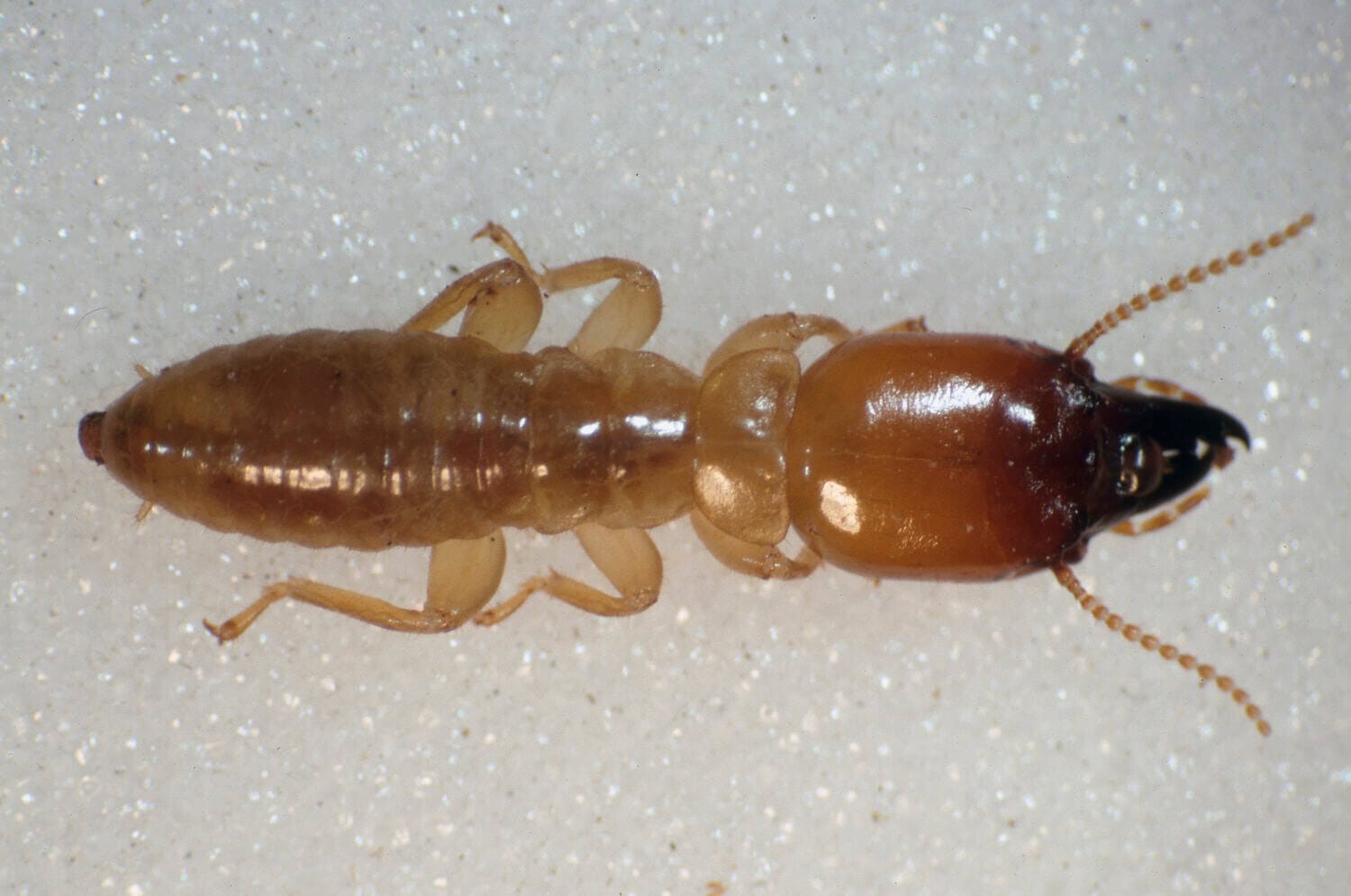
Photographer: Ken Walker, Museums Victoria
How to Identify: Porotermes adamsoni termites are typically larger than other species of termites, in lengths of around 15mm (winged or non-winged). The workers are generally fairly uniformly coloured with a chubby body and creamy-white colour. The soldiers are typically the same length as the workers, but have a dark reddish-brown head, and black mandibles or jaws that are well developed.
You can distinguish this type from the type of timber they love, but most importantly: the key traits of their soldiers’ heads.
Risk level: Moderate
Found: Bathrooms, subfloors, leaking pipe areas. These termites are typically found in trees and damp, decaying tree logs or even in gardens. However they may also infest homes if there is a significant amount of water rotted timber.
These termites are often a sign of plumbing or drainage problems.
Location: VIC, NSW, ACT, South East Queensland, TAS and some parts of SA
Behaviour: They do not build any shelter tubes, like Subterranean termites.
Treatment:
Chemical treatment by its own is often not effective enough to remove these termites. Removing any moisture-decayed timber is key. Preventing the issue from recurring again may also require solving plumbing issues and ensuring good sub-floor ventilation.
How to Identify Different Types of Termites
The main way you can tell the difference between different termite species is by the appearance of soldier termites in the colony. Primarily with the colour and shape of their mandibles and head.
In some cases where termites might be harder to visually see, such as drywood termites, identifying termites might be through their fecal droppings, also called ‘frass.’
The location of their infestation can also give you clues: Subterranean termites all need soil and therefore all build ‘shelter tubes’ or visible ‘mud nests’, Dampwood termites want rotted timber, and drywood termites show no sign of burrowing underground.
For accurate identification, Chambers Pest Control provides professional termite identification.
Our pest control specialists in Perth will be able to identify the species and in some cases, provide you with photo evidence against other photos of different types of termites upon inspection.
Protect Your Home From Any Type of Termite With Chambers Pest Control in Perth
Whether you’re trying to identify which termite species, wondering what type of wood termites eat, or searching for types of termites Australia-wide, the key takeaway is simple:
Early detection + long-term prevention = effective protection.
Chambers Pest Control provides:
- Comprehensive termite inspections
- Species-level termite identification
- Photos of different types of termites upon request
- Tailored termite treatment for Perth and WA
- Preventative protection options for all property types
Termites may be silent, but with the right support, they don’t stand a chance.
Book your termite inspection today and protect your home year-round.